
Text: Carina Steinhauser| Photography: AZUL
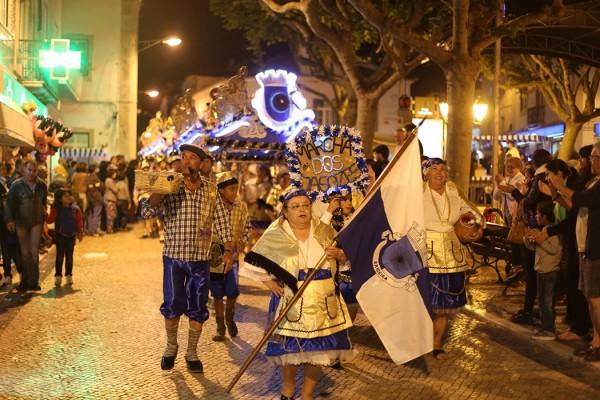
For one day each Spring, Ericeira goes back to its roots and celebrates the spirit of sharing and harmony. This year Dia da Espiga is happening on Thursday May 14.
Dia da Espiga is a centuries-old tradition in some Portuguese regions. Forty days after Easter, it falls exactly on Ascension Day. However, it isn’t a religious festival, but an ancient ritual deeply connected to the earth and the cycle of nature.
a true beautiful experience
Miguel Arsénio grew up in Ericeira as a Jagoz and has celebrated the day his entire life. “For me it’s a very strong traditional feeling.” In his first memory he was between ten and eleven years old and camped at Quinta dos Leitões with a group of friends, starting the evening before Dia da Espiga. “It’s a true beautiful experience, being outside watching the sky with stars, cooking your own food, sleeping next to your friends and having the first talks about girls”, he remembers. The following day he would spend with his family sharing meals and playing games.
People traditionally spend this day in the fields, away from the sea. It’s a day of solemn rest, spent with family and friends on walks, picnics and barbecues. The custom likely originates from a pagan tradition and represents gratitude for the first harvests, as well as the transition from the hardships of Winter to the Summer’s rest and fertility.
As he grew older, the evenings increasingly turned into parties centered around barbecues and drinking alcohol. To this day it is still a common practice for young people in the area. Around Ericeira, people typically gather at Foz do Lizandro, Ericeira Camping, Abadia, Forte de Milreu or Quinta dos Leitões.
Dia da Espiga is a municipal holiday. Locals don’t have to work and usually spend the day with their loved ones: family and friends. When Miguel was a child, Ericeira would turn into a ghost town on this day. Shops and supermarkets closed, and people left their everyday surroundings behind to gather closer to the land and the season’s first harvests.

Over the years, as more outsiders moved to Ericeira – which got wider and wider –, things began to change. At the same time, Espiga became increasingly popular. To Miguel Arsénio, this also had a negative side: “It made me feel a bit alienated and kind of sad inside to see this pure event turning into this business thing where people were opening their cafes and bars just to make a profit.”
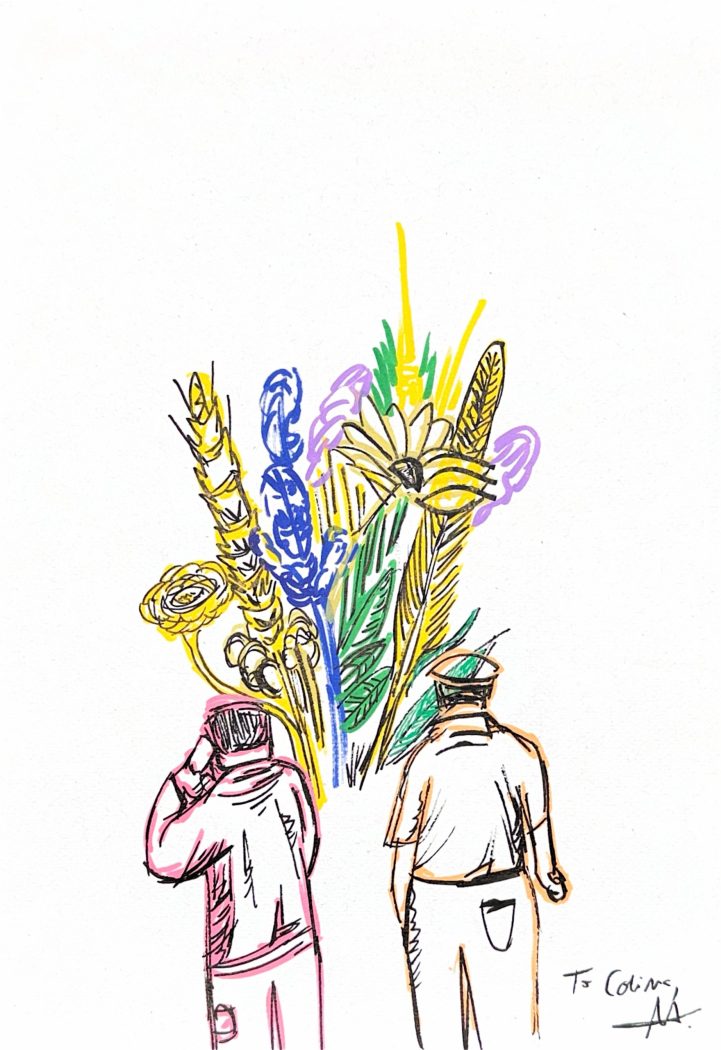
Part of the tradition is also to collect wheat ears and wildflowers such as poppies or marigolds, as well as branches of olive tree, rosemary, and vine. Each branch has its own meaning and should be hung as a wreath, the “Ramo da Espiga”, behind the entrance door as a symbol of luck and prosperity in the house.
Jagozes remain deeply proud of Espiga
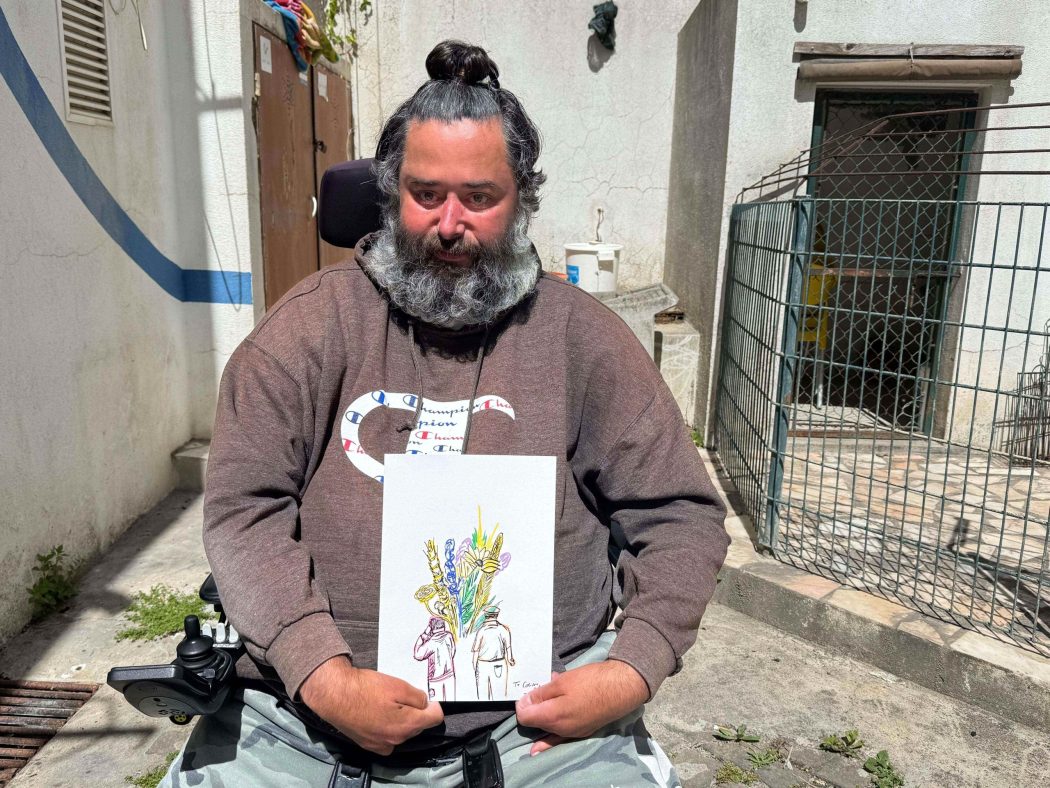
Miguel uses his garage in the center of Ericeira as a space to pursue his passion for painting and drawing. He says the Jagozes remain deeply proud of the Espiga tradition. For them, it is an annual reconnection with the roots and nature of the region passed on from generation to generation. The group of people he spends Espiga with only gathers once a year. They are his “Espiga friends”.
Dia da Espiga is a day for sharing, slowing down, and simply being together. “Today people are so connected and into their devices that they kind of forget that they need also the time for leisure, to take a rest and just to enjoy themselves.” Miguel thinks that nowadays this date may be more important than ever.
Esta publicação também está disponível em | This article is also available in: Portuguese (Portugal)